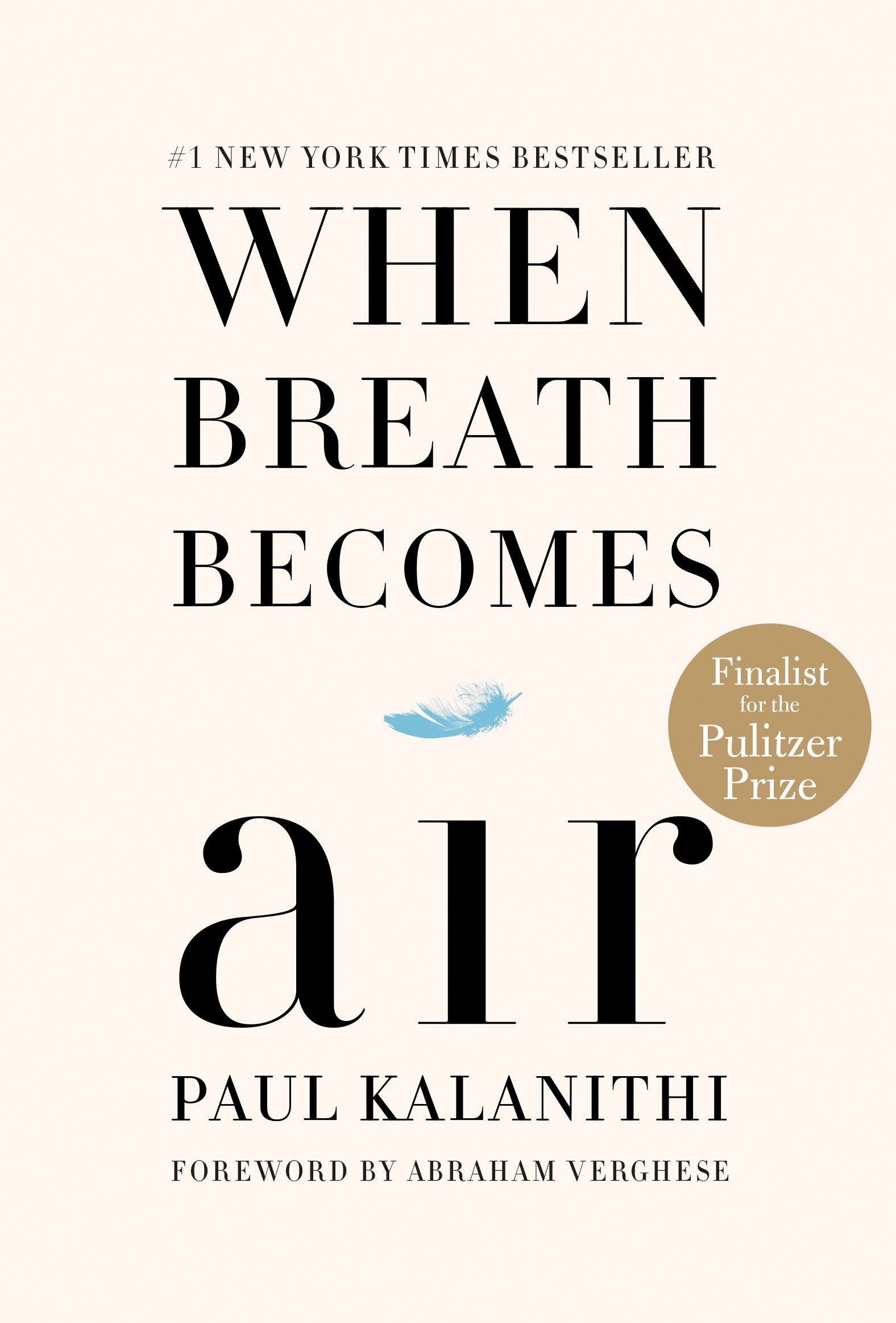
Author: Paul Kalanithi
Number of Pages: 225 Pages
Rating: ☆☆☆☆☆
Review: It will be hard to catch your own breath when streams of tears roll down your cheeks as you turn through the pages of Paul Kalanithi’s When Breath Becomes Air. During his last year of residency as a neurosurgeon, Paul was unexpectedly diagnosed with Stage IV lung cancer. His life, stripped of all the dreams he aspired to accomplish as a neurosurgeon and with his young wife Lucy. Paul has to redefine and rediscover his identity as he forages his path towards death. He ironically chose to become a neurosurgeon to confront the meaning of life while actively engaging with death. Now, Paul experiences life as the dying patient rather than the doctor treating the dying. Paul’s memoir chronicles this painful transformation from doctor to patient and answers his own life long question: what makes life worth living in the face of death?
When Breath Becomes Air answers the questions that everyone finds themselves asking through the duration of their own life. Paul brings to light in such explicit detail the pain and suffering yet euphoria he experienced during his last years and months of life. He describes his internal and external strife when coming to terms with his disease after his dreams of a future dissolved as quickly as the cancer metastasized within his body. His poetic writing brings the readers closer to his own soul as if he were sitting in the chair across the room telling his story from beginning to end, exposing his raw emotions and in turn exposing some of your own.
What stuck with me was the powerfulness of his death. Paul writes a brief message to his daughter before he dies and thanks her for the “salted joy” she brought to his life during times of unwavering darkness. The happiness can be literally felt through this passage. Paul’s poetic yet descriptive word choice connects this ending with the challenges of his own reidentification. If Paul were to succumb to the cancer and strip him ultimately of his neurosurgery and life aspirations, he would have never been gifted with the life of his daughter. His tone throughout the novel is motivational and thoughtful. His writing motivated his wife Lucy to write about what it was like during the last days of life, up until his final breath. His and Lucy’s writing made it feel as if he were dying right in front of our eyes, yet there was a sense of a peaceful closure to a life that seemly had just begun.


Did reading this book change your outlook on life?
ReplyDeleteThis book sounds very sad but at the same time very interesting.
ReplyDelete